

You used to step off a curb without giving it a thought. Now there’s a small pause first. The stairs feel a little less automatic, and getting out of the car takes a moment to find your footing.
Nothing dramatic has happened. You just don’t feel quite as steady as you used to, and you’re starting to notice how often you reach for something solid.
It’s tempting to put that down to being tired or getting older. But a change in your balance is worth understanding. You deserve to feel confident moving through your day, and finding out what has changed is the first step toward getting there.
The short answer: Feeling unsteady on your feet can involve your inner ear, vision, sensation in your feet, muscle strength, or the way pain and old injuries affect movement. More than one factor may be involved. Orthopedic acupuncture may help address contributing pain and muscle tension, while an assessment helps determine what other care you need.
Staying upright takes more teamwork than you might think
Balance feels effortless when everything is working together.
Behind the scenes, your brain is constantly using information from three main sources:
- Your inner ear: The vestibular system helps detect head movement and your position in relation to gravity.
- Your eyes: Vision helps you judge where you are in relation to your surroundings.
- Your body’s position sense: Called proprioception, this is information from muscles, joints, and sensory receptors that helps you know where your body is without looking at it.
Your muscles then have to respond to that information. A small adjustment through your ankle or hip can help keep you upright before you even realize you needed it.
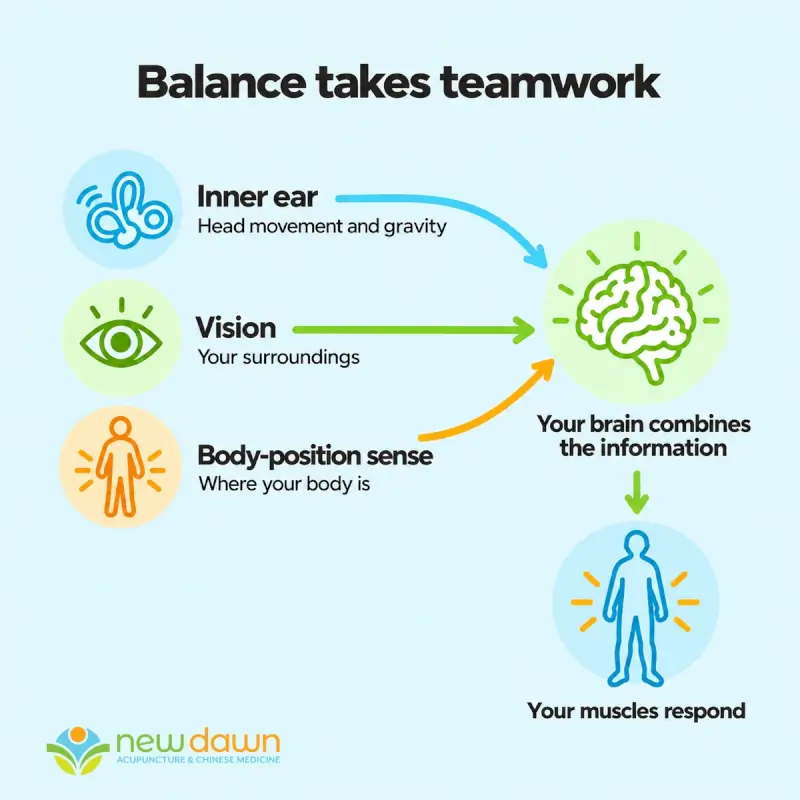
If one part of this system isn’t giving clear information, or your body can’t respond as easily, an ordinary movement may suddenly take more concentration. The National Institute on Deafness and Other Communication Disorders explains how these systems work together and why balance problems can have several causes.
The problem may be bigger than the moment you wobble
When someone tells me they feel less steady, I want to understand the circumstances. Is it happening on uneven ground, when turning, or after standing up? Does it come with pain, numbness, dizziness, or a spinning sensation?
Those details matter because “off balance” can describe very different experiences. Here are some of the contributors that deserve attention.
Tightness or weakness changes how you stabilize yourself
Your ankles, hips, and core all play a part in keeping you steady. If movement is restricted or the supporting muscles aren’t responding well, shifting your weight can feel less reliable.
You might notice it when stepping sideways to let someone pass, walking across a lawn, or getting up from a low chair. The task is familiar; the amount of effort it takes is new.
Your feet aren’t giving you the same information
Sensation in your feet helps you stay aware of the surface beneath you. When that feedback changes, you may feel less sure of where you’re placing your weight.
If unsteadiness comes with tingling, burning, or numbness, mention all of it when you seek care. Our peripheral neuropathy page explains New Dawn’s approach to those symptoms, which can be part of the balance picture.
Pain has quietly changed the way you move
A sore knee or hip can make you favor one side without realizing it. An ankle that never felt quite right after a sprain may still influence how you step and turn.
Your body finds ways to keep you moving, but those workarounds can become habits. If an old injury seems connected to your current movement problems, this guide to injuries that hurt years later offers more context.
The cause may need a different kind of care
Inner ear problems, changes in vision, medication effects, and other health conditions can also affect balance. Feeling lightheaded when you stand up is a different clue from feeling that the room is spinning when you turn your head.
An evaluation helps sort out those possibilities. It also helps us avoid assuming that every balance problem comes from tight muscles or an old injury.
When you start avoiding things, your world gets smaller
At first, you might skip the uneven path and stay on the sidewalk. Then you stop joining a friend for a walk because you don’t want to slow anyone down. Eventually, you realize how many decisions are being made around where you feel steady.
That caution is understandable. But moving less can also mean using the muscles that support you less, making it harder to maintain strength and confidence.
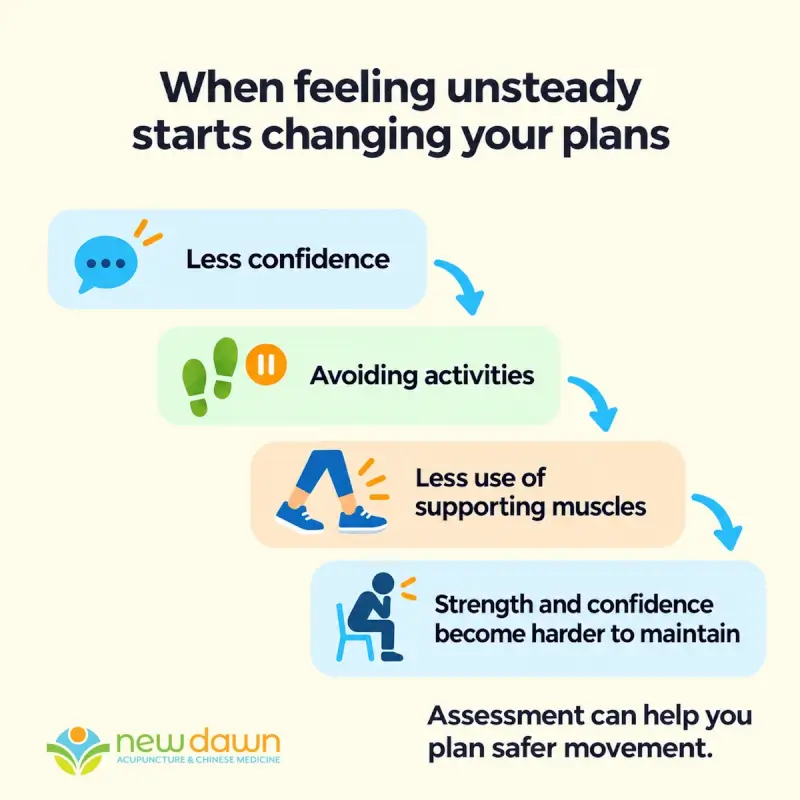
You don’t have to wait for a fall to take a change in balance seriously. Getting help can give you a clearer understanding of what is happening and a plan for moving safely, instead of continually crossing activities off your list.
Where orthopedic acupuncture can fit into your plan
Orthopedic acupuncture focuses on musculoskeletal problems and the way they affect movement. For someone with balance concerns, that means looking at contributing pain, muscle tension, restricted movement, and the lingering effects of injury.
If pain makes you avoid putting weight through one leg, easing that pain may help you move more comfortably. If tightness through an ankle or hip limits how you shift your weight, that restriction deserves attention too.
When reduced sensation is part of the picture, we also discuss the nerve-related symptoms and whether New Dawn’s neuropathy care is appropriate. The treatment plan depends on the contributing problem, rather than treating “balance” as a single diagnosis.
Acupuncture can be one part of that plan. Strengthening, physical therapy, vestibular rehabilitation, or other medical care may also be needed, depending on the cause.
If discomfort is changing the way you walk, learn about our chronic pain approach or contact me to discuss what’s happening. We’ll talk about whether New Dawn’s care fits your needs and what else should be considered.
Progress should show up in the movements you care about
Feeling steadier is personal. For you, it might mean turning in the kitchen without that moment of hesitation, getting up from a chair more comfortably, or feeling more confident on a familiar walk.
Those everyday goals help make the treatment plan specific. We can look at what is changing between visits, which movements still feel difficult, and whether the current approach is helping.
Improvement may be gradual, especially when several factors are involved. We discuss recommended visits, frequency, cost, and expected outcomes, then review your response. Any strengthening or stability work should be matched to your abilities so you can practice safely.
A change in balance deserves the right attention
Arrange a medical evaluation for new, recurring, or worsening balance problems, particularly if you’ve fallen or feel at risk of falling. Bring details about when it happens, any other symptoms, your medications, and past injuries.
Sudden trouble walking or loss of balance can be a stroke symptom, especially with facial drooping, weakness, trouble speaking, vision changes, or a sudden severe headache. Call 911 immediately if this happens; see the CDC’s stroke warning signs.
For gradual changes, getting assessed gives you a starting point. You don’t need to figure out the cause on your own before asking for help.

Questions people ask when they start feeling less steady
Are balance problems just part of getting older?
Balance problems become more common with age, but they can affect younger adults too. A change deserves assessment because the cause may involve movement, sensation, vision, the inner ear, medications, or another health condition.
Can an old injury affect my balance?
Yes. An injury can leave pain, restricted movement, weakness, or changes in how you distribute your weight. An assessment can help determine whether those lingering effects are contributing to your unsteadiness.
Can acupuncture help with balance problems?
Orthopedic acupuncture may help address contributing pain, muscle tension, and movement restrictions. It does not treat every cause of imbalance, so an assessment should guide whether it belongs alongside strengthening, rehabilitation, or other medical care.
What should I tell a practitioner about my balance?
Describe when you feel unsteady, what movements bring it on, and whether it comes with dizziness, spinning, pain, or changes in sensation. Include falls or near-falls, old injuries, medications, and any assessments or treatments you’ve already had.
Let’s help you feel more at home on your feet
You shouldn’t have to keep planning your day around the places and movements that make you uneasy. Understanding what is affecting your steadiness can open up a more useful conversation about how to help.
At New Dawn Acupuncture, I start by listening to what has changed and what you want to get back to doing. If you’re in Takoma Park, Silver Spring, Bethesda, Hyattsville, or Washington, DC, we can discuss whether our approach fits your situation and build a clear plan from there.
Schedule a consultation or call (202) 538-3995. Let’s talk about the steps that have started feeling less certain, and what might help you take them with more confidence.

Dawn Caudill, M.Ac., L.Ac., Dipl.
Founder of New Dawn Acupuncture and Chinese Medicine, Dawn brings more than 20 years of personal experience with acupuncture to her work. She combines traditional acupuncture with modern therapeutic tools to support relief and healing for chronic and acute health concerns in Takoma Park and the greater Washington, DC area.
Last Reviewed: October 12, 2026