
You tweaked your knee. Your shoulder has been “off” for months. Your back went out again, and this time, it isn’t bouncing back.
Maybe you’ve been told to rest it. Maybe you have a prescription, a referral, or the uncomfortable feeling that surgery is where this is heading. Meanwhile, you’re still making decisions around what hurts.
Before you assume you’ve exhausted your options, orthopedic acupuncture deserves a place in the conversation. It offers a way to address pain, muscle tension, and the soft tissue problems that can keep an injury from settling down.
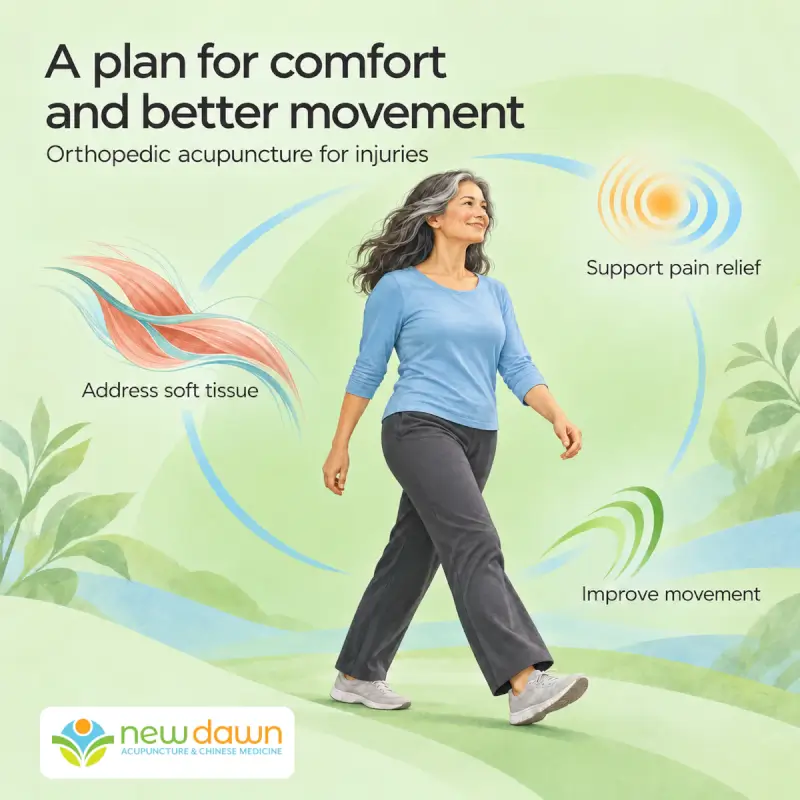
The short answer: Orthopedic acupuncture focuses on pain and movement problems involving muscles, tendons, joints, and surrounding tissues. It can be part of a conservative treatment plan for an injury, with the goal of helping you hurt less and move better. Whether it belongs in your plan depends on what is injured, how it is healing, and what other care you need.
An injury can change more than the place that hurts
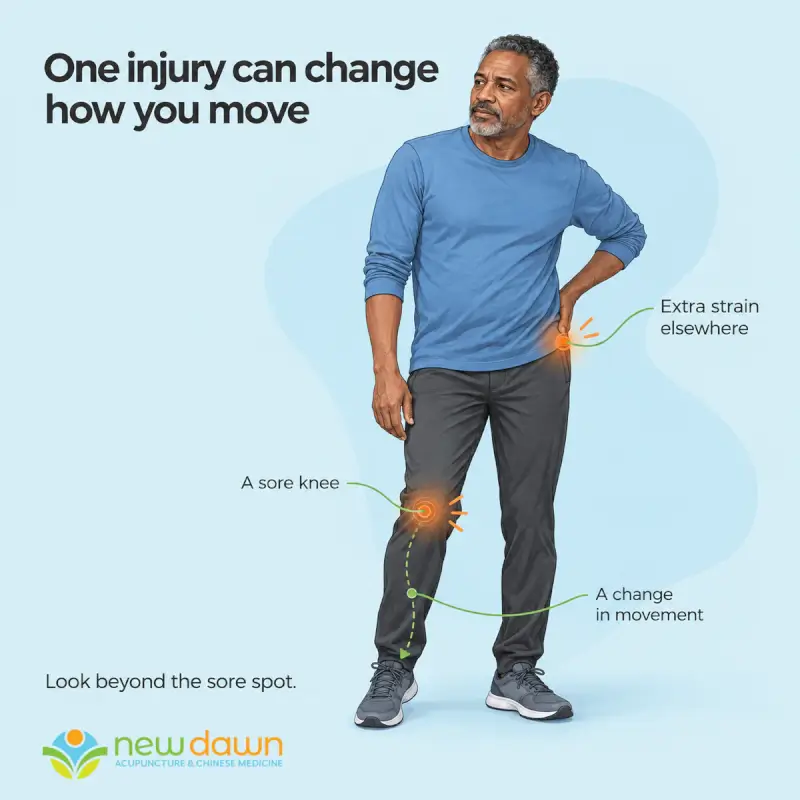
A sore knee can change how you climb stairs. A painful shoulder can change how you dress, sleep, and reach for a coffee mug. You adjust without thinking about it, because your body is very good at finding a way around discomfort.
Those adjustments can become part of the problem. Muscles tighten to protect an irritated area, other tissues take on extra work, and movements that used to feel effortless start requiring negotiation.
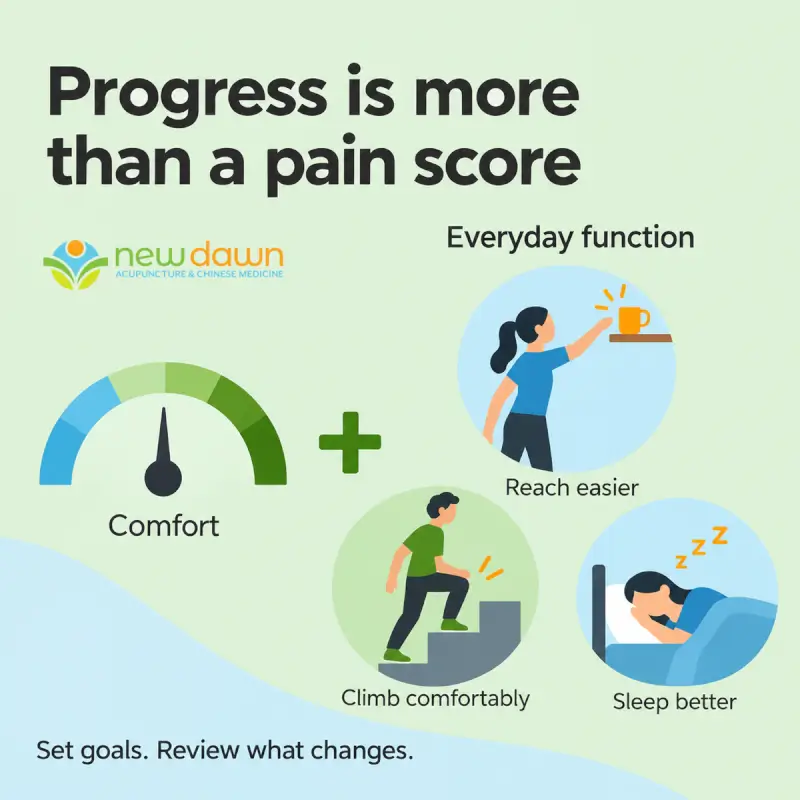
That’s why I want to understand more than your pain score. I want to know what happened, what you’ve tried, what movements are difficult, and what you’d like to get back to doing. The useful question is how we help you recover function, as well as feel better.
Three reasons to consider orthopedic acupuncture
1. Pain relief that works with your body’s own systems
Acupuncture stimulates the body’s natural pain-modulating responses. For someone who has been organizing the day around the next dose of pain medicine, having another way to support comfort can be meaningful.
Research on acupuncture for postoperative orthopedic pain has reported lower pain scores and reduced pain medication use. That is one part of the broader picture: acupuncture can be used within a treatment plan that also includes rehabilitation and medical care. Our guide explains how acupuncture and physical therapy can work together.
The goal isn’t to prove how much discomfort you can tolerate. It’s to help you move, rest, and participate in recovery with less pain getting in the way. Any changes to prescribed medication belong in a conversation with the prescribing clinician.
2. Attention to the tissue around the injury
Pain and tissue recovery are connected, but they aren’t interchangeable. Feeling a little better for a few hours doesn’t necessarily mean the area is moving well or handling everyday demands comfortably again.
Orthopedic acupuncture looks at muscle tension, local circulation, and the soft tissues involved in the problem. Laboratory research into inflammatory responses during wound healing and proposed mechanisms involving collagen remodeling in tendons also help explain the interest in acupuncture’s role in tissue recovery.
At New Dawn, persistent soft tissue pain may call for more than needles alone. Our FAST™ approach to chronic pain combines targeted acupuncture, cross-fiber manual therapy, and photobiomodulation, or low-level laser therapy, when appropriate for the problem we’re treating.
Each tool has a purpose. Your plan should make that purpose clear.
3. A chance to address the pattern before it takes over
An injury that changes how you move can have effects beyond the original sore spot. If you keep favoring one leg or protecting one shoulder, the surrounding areas may start doing work they weren’t meant to do on their own.
Getting help gives you a chance to understand that pattern and address it. It also gives you a clearer basis for decisions about further treatment, instead of simply waiting for the problem to become impossible to ignore.
That doesn’t mean every injury needs the same treatment, or that acupuncture can guarantee you won’t need surgery. It means conservative care deserves a thoughtful discussion when it fits your situation.
Where surgery fits into the conversation
“Can I avoid surgery?” is an understandable question. When pain is limiting your life, you want relief, but you also want to understand your options before making a major decision.
The answer depends on the injury. Acupuncture may be one part of conservative care, and it can also play a supporting role for people receiving surgical care. It shouldn’t delay a necessary orthopedic evaluation or a procedure your condition requires.
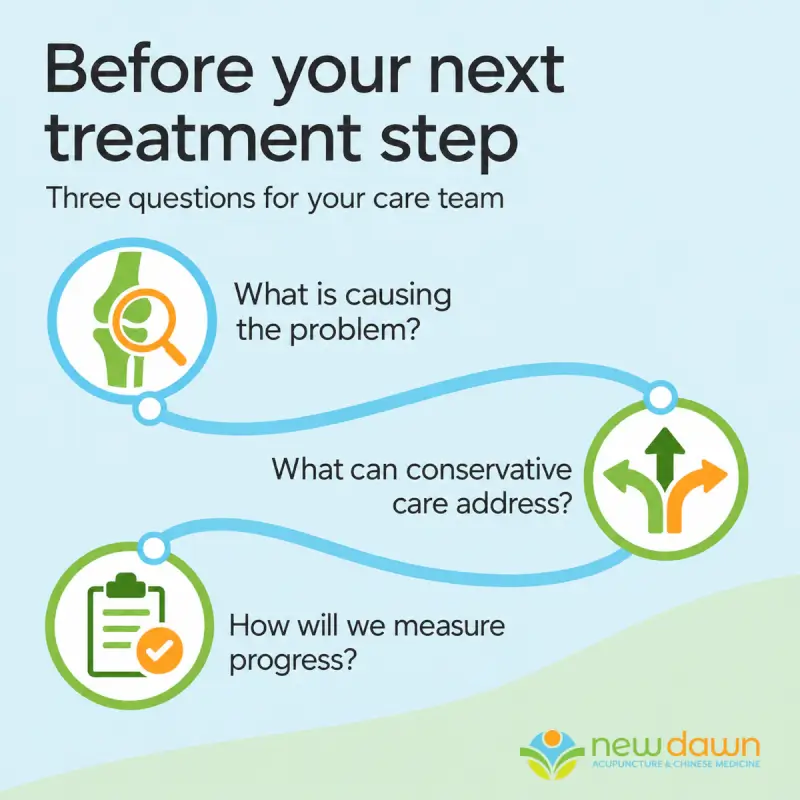
A better starting point is: What is causing the problem, what can conservative treatment reasonably address, and how will we know whether it’s helping? Those questions create a useful conversation with your care team.
If you’re weighing your options, contact New Dawn and tell me what has been happening. We can discuss whether our approach makes sense for your next step.
Your treatment plan should have a destination
“Keep coming back and we’ll see” isn’t much of a plan. You deserve to understand the recommended frequency, number of visits, cost, and changes we’re looking for along the way.
Progress might mean reaching overhead without that familiar catch, climbing stairs more comfortably, or sleeping without having to protect your shoulder all night. Those everyday improvements help us judge whether treatment is making a difference where it counts.
At New Dawn, the first step is listening. We look at your history, your current limitations, and your goals, then discuss the care that fits. You can learn more about our approach or read what happens at a first acupuncture appointment before getting started.
Questions that come up before treatment
What is orthopedic acupuncture used for?
Orthopedic acupuncture focuses on musculoskeletal problems involving muscles, tendons, joints, and surrounding tissues. Treatment is selected around the cause of your symptoms, the way you move, and your recovery goals.
Can acupuncture replace orthopedic surgery?
Acupuncture may be part of conservative care, but it cannot replace every operation. Whether surgery is needed depends on the diagnosis and severity of the injury; acupuncture should not delay necessary orthopedic care.
Is orthopedic acupuncture the same as FAST™?
No. Orthopedic acupuncture describes a focus on musculoskeletal pain and function. At New Dawn, FAST™ is an approach for appropriate soft tissue pain that combines targeted acupuncture, cross-fiber manual therapy, and photobiomodulation.
Get back to making plans around your life
You shouldn’t have to keep planning your day around the knee, shoulder, or back that won’t settle down. Understanding the problem and choosing a clear course of care is a practical place to start.
I work with patients in Takoma Park, Silver Spring, Bethesda, Hyattsville, and Washington, DC who want to get back to the activities that make them feel like themselves. We’ll talk about what hurts, what you’ve already tried, and whether New Dawn’s approach is a fit.
Schedule your consultation or call (202) 538-3995. Let’s find out what your injury needs next.
References
- Wrist-ankle acupuncture for acute orthopedic pain after surgery
- Acupuncture for postoperative pain and function in tibial fracture
- Acupuncture and wound healing
- Proposed mechanisms of acupuncture and tendon healing
- Acupuncture for extremity musculoskeletal pain
- Acupuncture and knee surgery rates in osteoarthritis
- Research trends in acupuncture for knee osteoarthritis
- AAOS: Complementary methods for pain after orthopedic surgery

Dawn Caudill, M.Ac., L.Ac., Dipl.
Founder of New Dawn Acupuncture and Chinese Medicine, Dawn brings more than 20 years of personal experience with acupuncture to her work. She combines traditional acupuncture with modern therapeutic tools to support relief and healing for chronic and acute health concerns in Takoma Park and the greater Washington, DC area.
Last Reviewed: October 21, 2026