
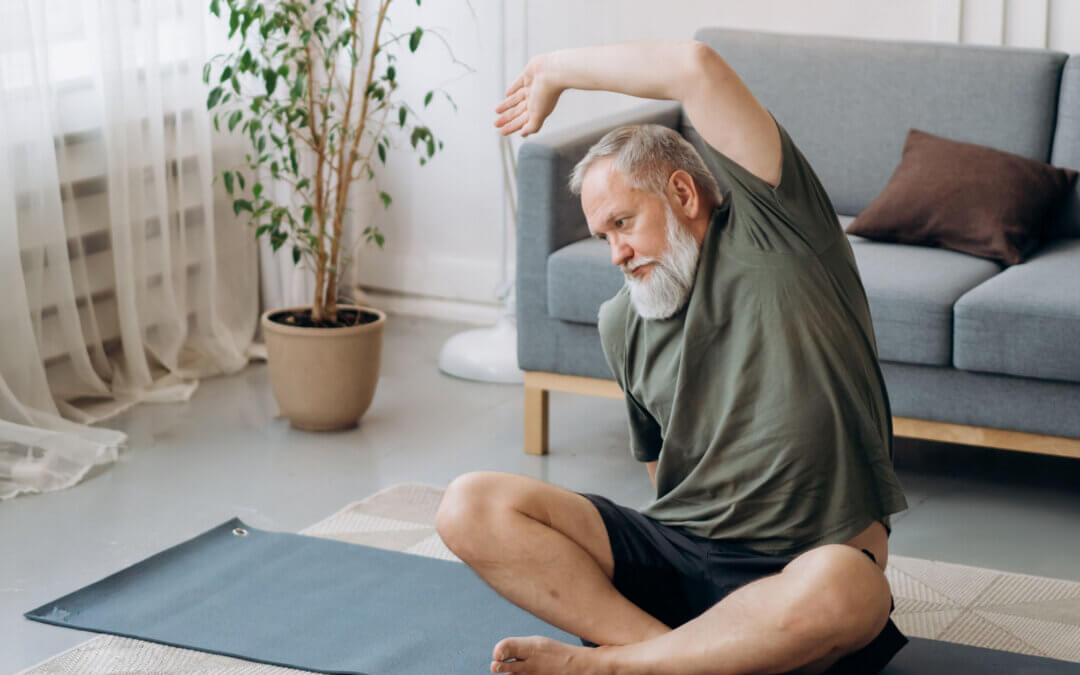
You remember to eat. You remember to sleep. You even remember your vitamins most days. But stretching? That gets pushed to the bottom of the list, somewhere between “organize the garage” and “call the dentist.”
Here’s the thing: your body is quietly paying for it.
Stretching is one of the most underrated health habits on the planet. Not because it’s complicated (it isn’t), and not because it needs equipment or a gym (it doesn’t). It’s underrated because most people have no idea how much it’s doing behind the scenes. And it doesn’t matter if you’re 7 or 97. Your body was built to stretch, and it rewards you every time you do.
Quick answer: Daily stretching does far more than improve flexibility. Research links regular stretching to up to a 50% lower risk of musculoskeletal injury, better blood vessel function and circulation (a real cardiovascular benefit), and improved mood through higher serotonin. It’s free, takes minutes, and works at any age, especially alongside acupuncture and whole-body care.
What Stretching Is Really Doing for You
The well-known benefit: flexibility and injury prevention
Yes, stretching keeps your muscles long, pliable, and ready to move. But here’s the number that surprises people: regular stretching can cut the risk of musculoskeletal injuries by up to 50%.¹ That’s not just for athletes. That’s for the parent chasing a toddler, the office worker reaching for a dropped pen, and the senior navigating the grocery store.
The little-known benefit: it’s good for your heart
Most people don’t think of stretching as cardiovascular, but it is. A study in the Journal of Physiology found that consistent stretching increased arterial dilation and blood flow, not just in the stretched limb but throughout the body, including the upper body when only the legs were stretched.² Researchers at UW-La Crosse found stretching helped preserve blood vessel function at twice the rate of not stretching at all. That’s heart-health territory, without a single lap around the track.
The truly surprising benefit: it lifts your mood
Stretching raises serotonin, the same neurotransmitter many antidepressants target, helping stabilize mood, reduce anxiety, and ease depression.³ A workplace study found that regular stretching reduced employee anxiety and exhaustion while boosting mental vitality. So that post-stretch “ahhh”? That’s your brain chemistry actually improving.
The Top 3 Stretches for Every Body, Every Age
You don’t need a routine full of complicated poses. Start with three.
Child’s Pose. Kneel, sit back on your heels, fold forward, and reach your arms long. A full-body reset for the spine, hips, and shoulders. Safe from about age 5 to 95.
Knee-to-Chest Stretch. Lie on your back and gently pull one knee toward your chest. One of the most researched stretches for lower-back relief and glute release. Gentle enough for seniors, effective for athletes.
Seated Hamstring Stretch. Sit tall, extend one leg, and reach gently toward your ankle. Improves posture, hip mobility, and range of motion in the knees. No flexibility required, just consistency.
Your Next Step
Stretching is simple, safe, and quietly powerful, and it pairs beautifully with acupuncture and whole-body care to help your body feel its best at any age. If you’re carrying chronic tension or stiffness, our approach goes after the deeper soft-tissue causes that stretching alone can’t reach.
Ready to move, feel, and live better?
If you’re in Takoma Park, Silver Spring, Bethesda, or Washington, DC, book your appointment today, or call (202) 538-3995.
References
- Stretching and injury prevention: regular stretching improves flexibility and circulation and can reduce musculoskeletal injury risk by up to 50% (Behm et al., 2016). Keilor Road Physio | RGA Knowledge Center
- Stretching and cardiovascular health: passive leg stretching increased arterial dilation and systemic blood flow (Journal of Physiology); a stretching group retained blood vessel function at twice the rate of non-stretchers (UW-La Crosse). Harvard Health | ScienceDaily | UW-La Crosse
- Stretching and mood: stretching raises serotonin; a 2022 meta-analysis (18 RCTs, 1,184 participants) found it reduced pain perception and improved quality of life. Fortune | Colorado State Healthy Aging Center | Institute for Functional Medicine